
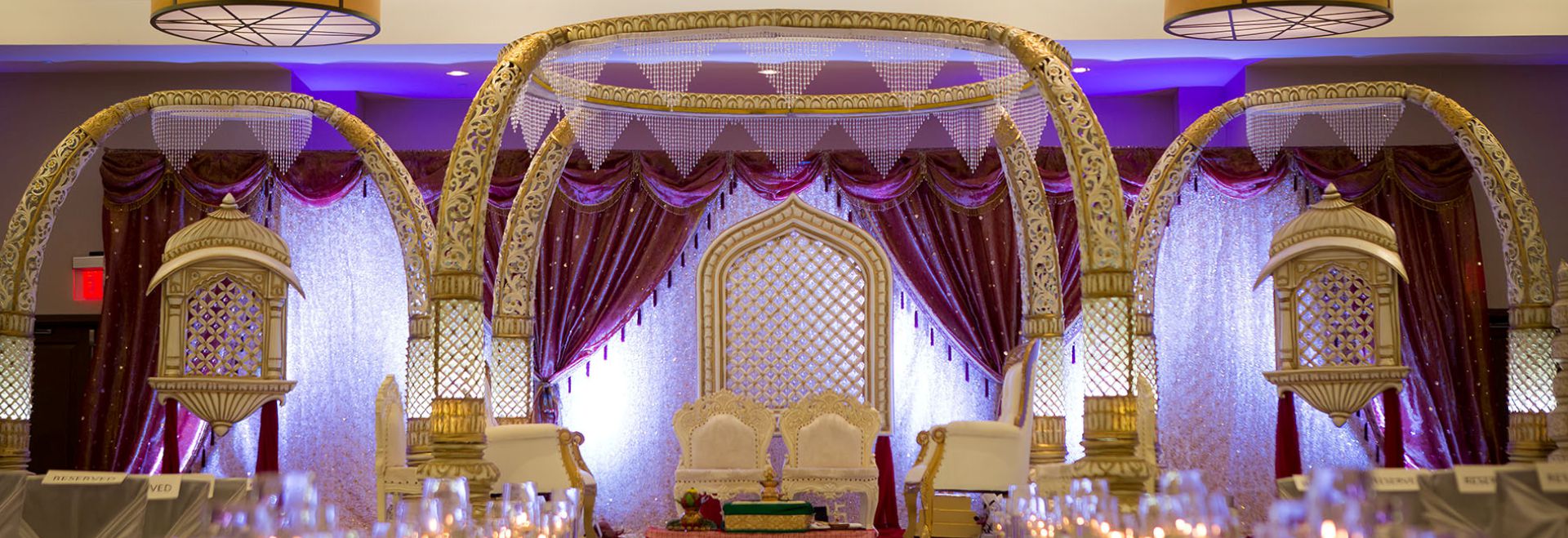
At the heart of a traditional Hindu wedding is one of its most recognisable and meaningful features: the mandap. Beautifully decorated with flowers, fabrics, pillars and ceremonial details, the mandap is much more than an impressive backdrop. It is the sacred space in which many of the most important rituals of a Hindu wedding take place.
For couples planning an Indian wedding in the UK, choosing the right wedding mandap is therefore an important part of creating the ceremony. From traditional structures inspired by Indian heritage to contemporary floral designs and elegant minimalist styles, today’s mandaps can complement almost any wedding theme.
At Vidhi Events, our extensive collection of Indian wedding decor and dry hire products gives couples, families, wedding planners and event professionals the flexibility to create a ceremony setting that reflects their traditions, venue and individual style.
What Is a Mandap?
A mandap, often referred to as a wedding mandap or Hindu wedding mandap, is the ceremonial structure beneath which a Hindu marriage ceremony traditionally takes place.
It is commonly built around four pillars and creates a defined ceremonial area for the bride and groom, priest and family members participating in different stages of the wedding.
Although the appearance of the mandap has evolved significantly, its importance within Hindu wedding ceremonies has remained.
A modern Indian wedding mandap might feature floral arrangements, luxurious draping, ornate pillars, foliage, traditional decorations or contemporary architectural elements. The design can change considerably from one wedding to another, but its ceremonial purpose remains at the centre of the occasion.
Why Is the Mandap Important in a Hindu Wedding?
The mandap is important because it creates the sacred setting in which many of the principal Hindu wedding rituals are performed.
Unlike a wedding stage or decorative backdrop primarily created for visual impact, the Hindu wedding mandap has an important ceremonial function.
Depending on the family’s customs and Hindu traditions, important moments taking place within or around the mandap can include the Kanyadaan, Havan, Mangal Phera and Saptapadi.
This means choosing a mandap involves more than selecting a design that looks beautiful.
The size, structure and layout should provide sufficient space for the couple, priest, ceremonial items and family members who may participate during different stages of the wedding.
The Four Pillars of the Mandap
Four pillars are one of the most recognisable characteristics of a traditional mandap.
The precise symbolism associated with these pillars can differ between Hindu traditions, communities and families. They help define and support the sacred ceremonial space in which the marriage takes place.
From a decorative perspective, the pillars have also become a major feature of Indian wedding mandap decoration.
Traditional weddings might use ornate gold-effect or carved pillars, while contemporary ceremonies may feature floral columns, minimalist frames or modern architectural structures.
This flexibility allows couples to retain the traditional form of the mandap while adapting its appearance to their individual wedding style.
The Sacred Fire – Agni
Another important element of many Hindu wedding ceremonies is Agni, the sacred fire.
A ceremonial fire is traditionally created within a Havan Kund, with the priest conducting rituals and reciting prayers and mantras. During parts of the ceremony, the couple may circle the sacred fire as part of their marriage rituals.
For this reason, the practical layout of a Hindu wedding mandap can be just as important as its appearance.
Couples planning an indoor wedding should confirm their venue’s requirements regarding ceremonial flames, fire alarms, ventilation and health and safety well before the wedding date.
The Mandap as the Centrepiece of an Indian Wedding
From a visual perspective, the mandap frequently becomes the centrepiece of an Indian wedding ceremony.
Guests naturally focus on it throughout the rituals, professional photographs capture it from numerous angles, and many of the couple’s most important wedding memories are created beneath it.
The mandap decoration can therefore establish the visual character of the entire ceremony.
Flowers, draping, colours and decorative details used around the mandap can be carried through to the wedding aisle, entrance and surrounding ceremony area.
Complementary decor can include floral arrangements, decorative pillars, pedestals, aisle runners, Ganesh idols, spiritual decor, Havan Kunds, seating, lanterns, candles, decorative vases, traditional pots, trees and greenery.
By coordinating these elements with the mandap, couples can create one complete and visually consistent wedding setting.
Traditional Indian Wedding Mandap Designs
A traditional Indian wedding mandap often incorporates rich colours, ornate details and elements influenced by Indian architecture and cultural traditions.
Gold, red, ivory, cream and maroon are popular choices for traditional wedding settings. Decorative pillars, luxurious fabrics, garlands, traditional pots, spiritual elements and floral arrangements can all be incorporated into the design.
For couples who want their ceremony to maintain a strong connection with Indian heritage, a traditional mandap can provide an impressive focal point while creating an appropriate setting for the wedding rituals.
Modern Wedding Mandap Designs
Indian weddings in the UK increasingly combine traditional ceremonies with contemporary event styling.
This has led to the growing popularity of modern mandap designs.
Contemporary wedding mandaps may feature cleaner architectural lines, neutral colours, carefully positioned flowers and understated draping.
Popular colours include white, ivory, champagne, blush pink, sage green and gold.
Choosing a modern mandap does not mean removing the cultural importance of the ceremony. Instead, couples can retain the traditional ceremonial structure while presenting it through a contemporary design.
Floral Mandap Decoration
Flowers are among the most popular features of modern mandap decoration.
A floral mandap might be extensively covered with flowers or use more subtle arrangements positioned around the pillars and upper structure.
Popular combinations include white and ivory flowers with greenery, blush and pastel arrangements, traditional red and white combinations or vibrant multicoloured floral displays.
The floral design can also be coordinated with the wedding aisle, entrance decorations and surrounding ceremonial space.
This creates continuity throughout the venue and helps transform individual decorative pieces into a complete wedding design.
Indoor and Outdoor Wedding Mandaps
Hotels, banqueting suites, manor houses and dedicated wedding venues are popular locations for Indian weddings throughout the UK.
An indoor wedding mandap provides considerable flexibility because the ceremony is protected from changing weather conditions.
The mandap design can also complement the existing architecture of the venue. A grand hotel ballroom might accommodate an elaborate structure, whereas a contemporary venue may work particularly well with a cleaner and more minimalist design.
Outdoor weddings offer different possibilities.
Gardens, country estates and landscaped venues can provide spectacular natural surroundings for an outdoor wedding mandap. Open structures and floral mandaps work particularly well because the landscape itself becomes part of the ceremony backdrop.
Outdoor ceremonies do, however, require additional planning around weather, wind, ground stability and rain protection, particularly when organising a wedding in the UK.
Matching Your Mandap to Your Wedding Theme
One of the advantages of modern Indian wedding decor is the enormous choice available.
A wedding mandap can be styled to complement virtually any colour palette or wedding theme.
Popular combinations include white and gold for an elegant and luxurious look; ivory and champagne for a softer neutral style; red and gold for a more traditional Indian wedding setting; blush pink and ivory for romantic floral ceremonies; sage green and white for contemporary botanical weddings; and emerald green and gold for a rich, luxurious appearance.
Once the core colour palette has been chosen, elements of it can be carried throughout the mandap, aisle, entrance and surrounding ceremony decor.
Choosing the Right Mandap for Your Wedding Venue
Before selecting a mandap purely on appearance, consider the practical characteristics of your venue.
The available floor space is particularly important. There should be enough room for the bride and groom, priest, ceremonial items and participating family members.
Ceiling height should also be checked carefully. Tall pillars and large floral arrangements may look spectacular, but accurate measurements are essential.
Other considerations include access for bringing decor into the venue, setup and collection times, floor protection requirements, venue restrictions and requirements surrounding the ceremonial fire.
Confirming these details before choosing your Indian wedding mandap can help prevent problems closer to the wedding date.
Mandap Hire and Indian Wedding Decor Hire
Purchasing specialist wedding decorations for a single event can be expensive and impractical.
Mandap hire and Indian wedding decor hire allow couples and wedding professionals to access specialist event products without purchasing and storing everything themselves.
Dry hire can be particularly suitable for wedding planners, event decorators and families who already have arrangements for transporting, installing and styling their chosen products.
It also gives customers greater flexibility when selecting individual pieces and combining them to create a customised ceremony setting.
Dry Hire Indian Wedding Decor from Vidhi Events
Vidhi Events specialises in dry hire event decor, providing an extensive selection of products suitable for Indian weddings and celebrations.
Our dry hire approach gives couples, families, wedding planners, event organisers and professional decorators the freedom to select the products required for their individual event.
Customers can browse products online, see available stock and quantities, and place their hire order directly through the Vidhi Events website.
Our collection includes products suitable for Hindu wedding ceremonies as well as associated celebrations including Roka, Mehndi, Haldi, engagement and wedding reception events.
From mandap structures and ceremonial accessories to pillars, floral decorations, aisle decor, draping, seating, spiritual decor and traditional props, individual products can be combined to create a distinctive wedding environment.
Creating a Complete Hindu Wedding Ceremony Setting
Although the mandap is normally the principal focal point, the surrounding ceremony space can significantly influence the overall appearance of the wedding.
Consider the experience from the moment guests enter the ceremony area.
Entrance decor can introduce the wedding style, while a ceremonial carpet or aisle runner creates a visual route towards the mandap. Flowers, petals, lanterns, decorative arrangements, pedestals and greenery can then be positioned along the aisle.
At the front of the ceremony space, the wedding mandap becomes the main visual and ceremonial focus.
Using related colours, materials and decorative elements throughout these different areas creates a more coordinated appearance than choosing each element independently.
Mandaps for Different Hindu Wedding Traditions
Indian weddings are incredibly diverse.
Ceremonies vary according to regional heritage, community, family customs, religious traditions and individual preferences.
Gujarati, Punjabi, South Indian and other Hindu wedding ceremonies may therefore have different requirements.
There is no single mandap layout or decoration style that represents every Hindu wedding.
Before finalising the mandap and ceremony layout, couples should discuss their particular ceremonial requirements with their priest and family.
This allows the wedding decor to complement the ceremony without interfering with important traditions or rituals.
How to Plan Your Wedding Mandap
Start by confirming your venue and measuring the available ceremony space, including the ceiling height.
Consider how many people may need to be inside the mandap during different parts of the ceremony and establish the requirements for the Havan and other ceremonial elements.
Next, decide on your preferred style.
Would you like a traditional Indian mandap, a luxurious floral design, a contemporary minimalist structure or something colourful and culturally inspired?
Once you have selected the overall style, choose the supporting decor. This could include pillars, pedestals, floral arrangements, aisle runners, draping, seating, ceremonial accessories, spiritual decor and entrance decorations.
Finally, check availability as early as possible.
Popular Indian wedding decorations and mandap hire products can be in high demand during peak wedding periods, so planning early can provide a wider choice.
Frequently Asked Questions About Mandaps
What is a mandap in an Indian wedding?
A mandap is the ceremonial structure beneath which many of the principal rituals of a Hindu wedding traditionally take place. It creates the sacred area for the couple, priest and participating family members.
Why is the mandap important?
The mandap is important because it provides the sacred setting for significant Hindu marriage rituals. It also becomes the central visual feature of many Indian wedding ceremonies.
What happens under a Hindu wedding mandap?
Depending on the family’s traditions, ceremonies beneath the mandap may include rituals such as Kanyadaan, Havan, Mangal Phera and Saptapadi.
What is a Havan Kund?
A Havan Kund is the vessel or structure traditionally used for the sacred ceremonial fire during the Havan.
Can you hire a mandap for an Indian wedding?
Yes. Specialist wedding decor and dry hire companies can provide mandap structures and complementary Indian wedding decorations for hire, subject to availability.
What decorations can be used around a mandap?
Popular options include flowers, drapes, decorative pillars, pedestals, lanterns, candles, greenery, spiritual decor, traditional pots, aisle runners and ceremonial accessories.
Finding the Perfect Mandap for Your Indian Wedding
The mandap is much more than a beautiful piece of Indian wedding decoration. It is the setting in which some of the most meaningful moments of a Hindu wedding take place.
Its combination of cultural significance, family tradition and visual importance makes the mandap one of the defining elements of an Indian wedding ceremony.
Whether your vision is a traditional Hindu wedding mandap, an elegant floral mandap, a luxurious white and gold ceremony or a contemporary minimalist design, the decor should enhance the ceremony while allowing its traditions to remain at the centre of the occasion.
At Vidhi Events, our extensive dry hire collection provides couples, families, wedding planners and event professionals with the flexibility to create distinctive Indian wedding settings using carefully selected decor products.